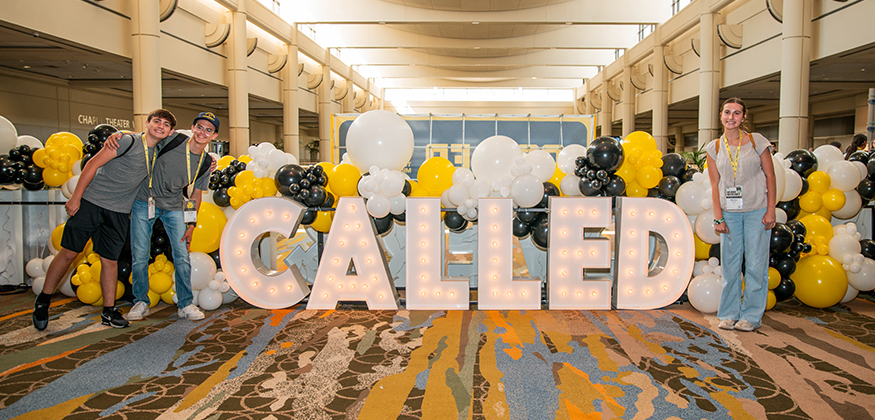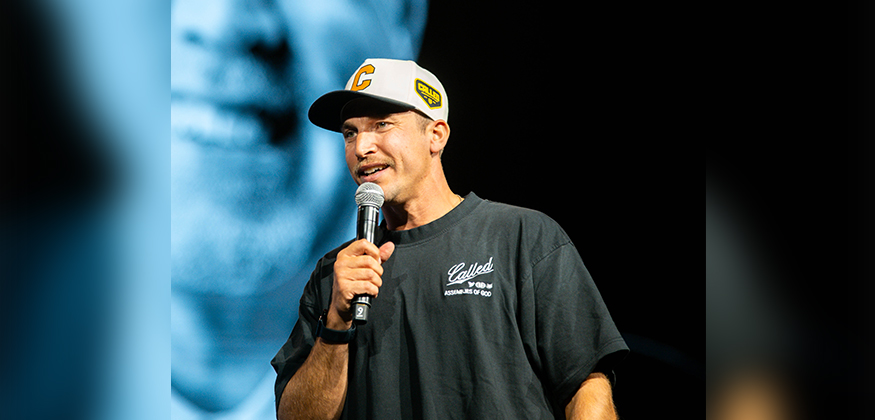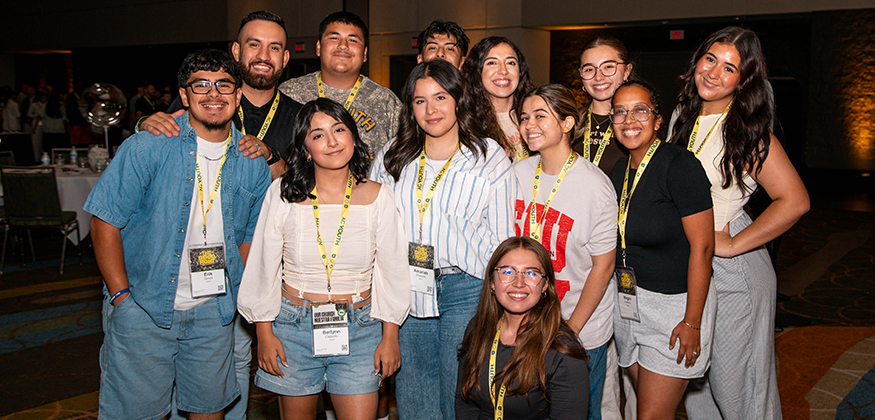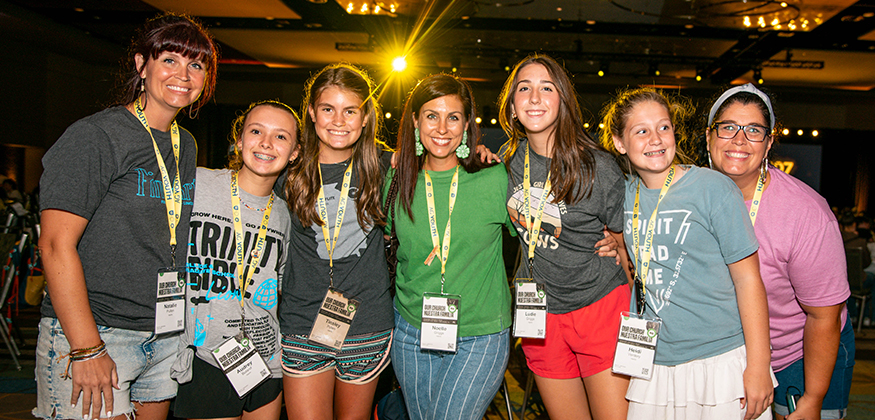
Hundreds of Students Encouraged, Counseled During CALLED Dinner Event
The message to the multiple hundreds of students, who were there because they felt God’s call into ministry, began with key thoughts, such as, “The God who called you is the same God who will equip you,” and “God doesn’t call the qualified, He qualifies the called.”
John Zick, national director of CALLED then introduced John Easter, AG World Missions executive director, who shared exciting news of God moving around the world, and the need for thousands to set aside their own agendas and lean into their calling from God. He then teased students with hint about a special initiative — the largest in the history of AGWM — that will be launching Thursday night, opening new fields.
“This next 10 years is for you,” he said and concluded with a prayer, asking God to make this the “greatest generational response to the call of God in the history of our Movement.”
Rick DuBose, assistant general superintendent, then spoke on the calling of God. He noted how the children of Israel had the cloud to follow when escaping Egypt.
“They always knew if the cloud moved, they moved; if the cloud stopped, they stopped,” DuBose said. “In the Old Testament, one cloud led the whole nation.”
However, just as the Israelites experienced, DuBose noted, that wherever the cloud stopped, the manna fell.
“Wherever God stops, His provision will be,” DuBose said. “But when He moves, we must move.”
DuBose also advised students that wherever God stops, to do as the Israelites did: build an altar.
“We know there are two ways God helps put us in the place of our assignment — He speaks to us, which always requires a step of faith to get there, or He places us in circumstances we cannot avoid, and you find yourself where God needs you by circumstance,” he said. “Either way, stay with the cloud and you’ll always have everything you need to do everything God has called you to do.”
Evangel University, which partnered with CALLED to put on the event, then provided information about the school, and concluded by awarding a scholarship worth $80,000 to a student whose name was drawn from the list of those students who attended the event.
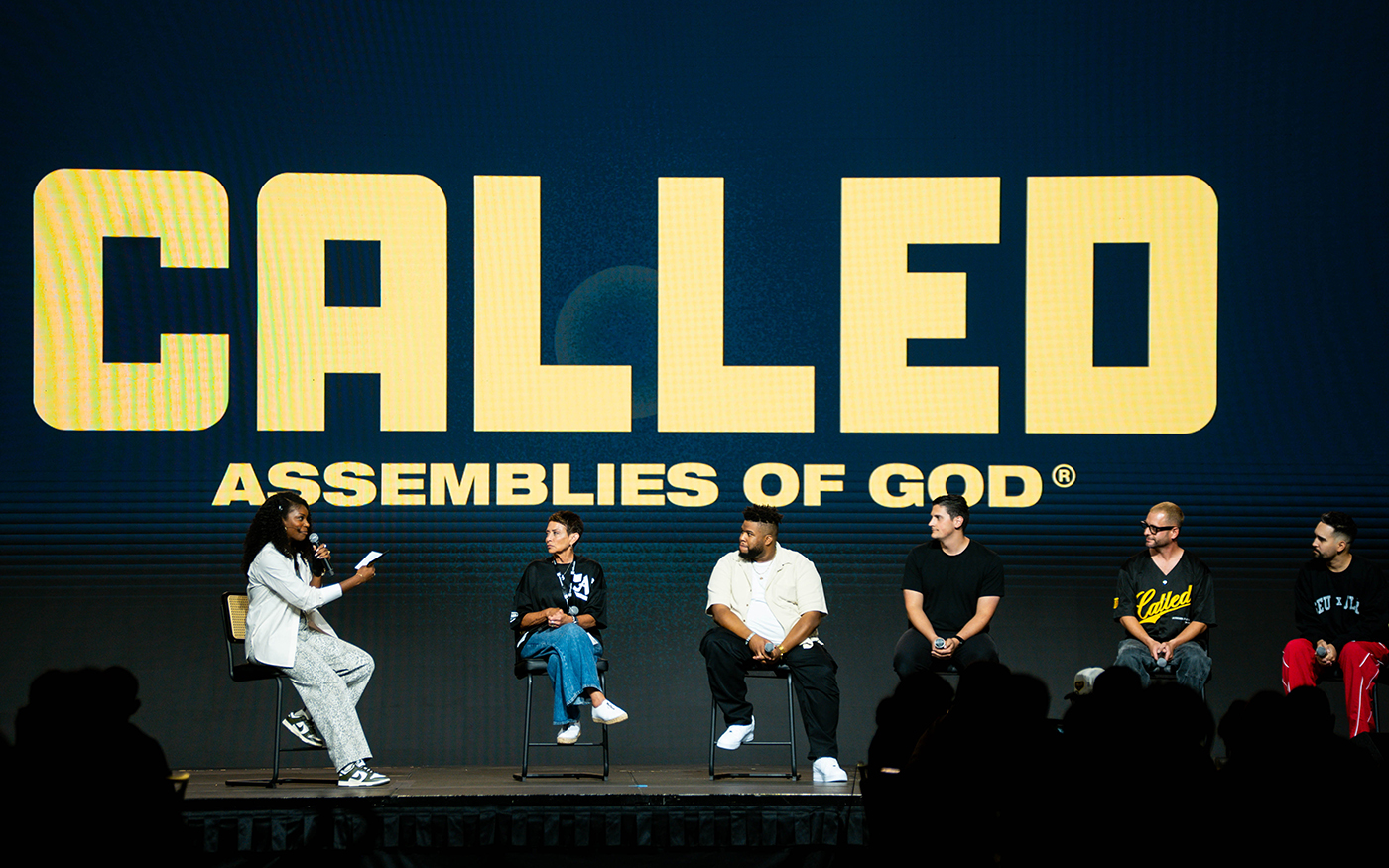
The evening continued as a panel of ministers were introduced and asked a series of probing questions — questions that would prove valuable to the students. First the panelists described their call and then responded to some individual questions.
Jolene Taylor, co-lead pastor of Journey Church in Kenosha, Wisconsin, for the last 30 years, explained she’s always had a call on her life to ministry, but it wasn’t until she followed the Holy Spirit and became credentialed (uncommon in Wisconsin at the time) is when big change started taking place.
Reggie Hill, the young adults pastor at Journey Church, explained his call came when he was serving as a volunteer youth leader. Noting that at that point, he just said yes to whatever God placed in front of him.
Carlo Orlando, the NextGen pastor of Calvary Temple International in Wayne, New Jersey, explained that he felt the call as a fourth grader and then ran from it as hard as he could. But when at 14, he rededicated his life to Christ and ran toward the call, he wasn’t sure what his call meant at the time. But he said his call had since moved him multiple times in ministry.
Matt Harder, youth director for the Northwest Ministry Network, recalled it was a missionary’s message that sparked the call in his life, and he urged students to get involved in a local church. “There are no perfect churches out there; you’re going to have good times and hard times, but stay faithful.”
The final panelist, Jonathan Rivera, the campus pastor at Southeastern University in Lakeland, Florida, said he believed people often find their calling by stumbling into it. He too becoming involved in the ministries of the church, which helped him discern the call in combination with “holy nudges,” desires, the community around him, and the voice of the Holy Spirit.
Taylor was asked about then asked about a time she may have doubted her call or quit.
As a woman, she noted that at times doubting occurred when the opportunities didn’t seem to be there — how’s that going to work? — but she never quit on her calling. But then she made a powerful point.
“I’m first called to obedience,” she said. “I’m not called to do a thing.” She noted how having a good community of friends around her, good mentors, and leaning into Jesus was invaluable.
Orlando responded to the same question by making the observation that many assume that somehow a person with a calling has everything figured out their whole lives.
“You have doubts,” Orlando clarified. “But be careful who you share your doubts with; if they’re not called to ministry, they’re not going to get it. Find people who are also called or out ahead of you.”
Hill was asked about something he really leaned into once he felt the call of God. He said at first, he was unsure what to do with it, but then he just started serving — saying yes to whatever the Lord put in front of him.
“I did it all,” he said. “I tried to be obedient. So, if you feel called, be serving the next generation . . . and read your Bible. You can’t proclaim the Bible to be fully true if you don’t know it’s true yourself.”
Harder responded to a question about the people and things he had to let go when he sensed the call of God.
“I needed to let go of insecurity,” he said, adding he also had to let go of some family history, hurt, and church trauma. He warned against getting so focused on doing the ministry, that you forget to choose to die to yourself.
“Every morning begin by asking God to ‘create in me a clean heart and renew a right spirit within me (Psalm 51:10).’”
Rivera also responded to the question, agreeing that the past has to be let go.
“Your past will be the shackles that hold you back from your future,” he said, noting that his past was filled with reasons that he used to feel disqualified him from being a minister. He also warned students that it’s great to admire people, but God’s not calling them to copy people.
“God wants to use you,” he said.
Taylor was then asked about the one thing she would want to tell her younger self.
“To get going,” she responded. “You’re not too young, you’re not too loud, you’re not too anything — God has called you now, start doing . . . serving Jesus wholeheartedly.”
In the final question of the night, Hill was asked to give one of the greatest takeaways he could give students.
“Read the Bible. Know it. But also get leaders in your life,” he said. “You’re doing yourself wrong if you try to go around following God in your life by yourself . . . there are mentors in here who are ready, willing, and able; just tap them on the shoulder and ask for five minutes of their time.”
Austin Westlake, national Youth director, then followed the panel, asking students to consider how things may change in their lives in order to fully respond to God’s calling.
Referring to Matthew 26:52, where Peter cut off a man’s ear during Jesus’ arrest, Jesus told him to stop, saying “those who draw the sword, die by the sword.”
“Jesus was saying that’s how you used to handle things, you don’t handle things like that anymore,” explained Westlake. “You have a calling on your life . . . it may mean some processes might have to change with you.”
The evening concluded with CALLED Director John Zick urging students to make sure that Jesus is at the center of everything they do.
“Never forget why you’re doing what your doing,” he said. “It’s about your relationship with Him, first!”
The night concluded with a time of prayer, worship, and Communion.